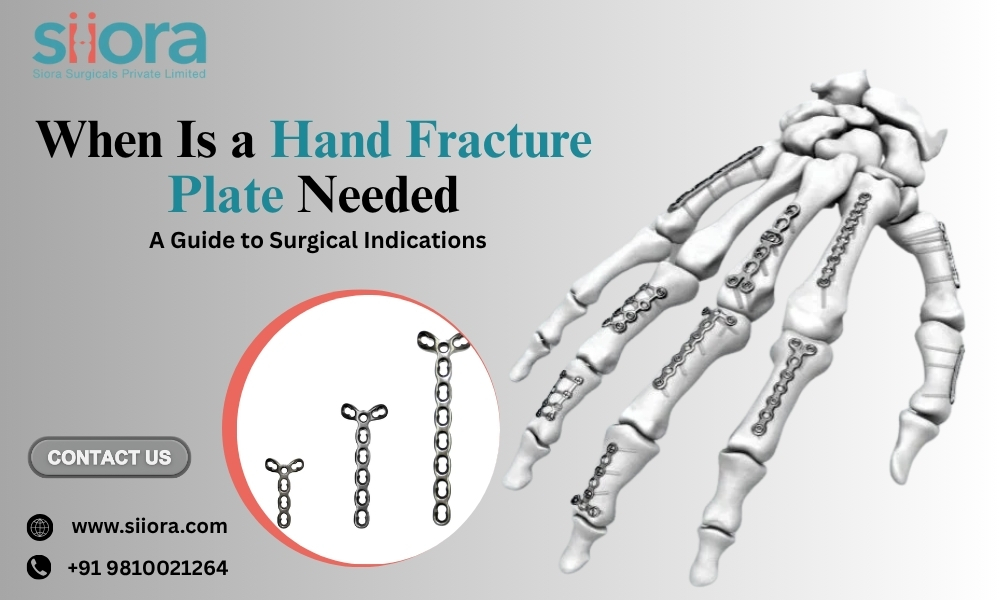
Injuries to the hand can be surprisingly complicated. While it might seem like a small area, the hand is made up of 27 bones, all essential for our daily activities like writing, cooking, or even giving a thumbs-up. When one or more of these bones break, sometimes a simple cast just won’t cut it. That’s where hand fracture plates come into play.
But not every hand fracture needs surgery. So, when exactly is a hand plate necessary? Let’s walk through the key situations where doctors might recommend plating and what it means for your recovery.
What Is a Hand Fracture Plate?
A hand fracture plate is a small, specially designed metal device, usually made from titanium or stainless steel, used to stabilize broken bones in the hand. Surgeons attach it with tiny screws during a procedure called open reduction and internal fixation (ORIF). The goal? To hold the broken bone fragments in perfect alignment so they can heal properly.
When Is Surgery with a Plate Needed?
- Unstable Fractures
Some fractures simply won’t stay in place. If the bones are misaligned or if they shift after being set, a plate can help stabilize them. Think of it like scaffolding for a healing building, giving structure and support while nature does the rest.
- Multiple Fracture Fragments (Comminuted Fractures)
When a bone breaks into several pieces, it becomes difficult to keep everything aligned with a splint or cast. Plates can act as a bridge, holding the smaller bone fragments together in the right position.
- Intra-Articular Fractures
If the fracture extends into a joint (like the knuckles), precise alignment is crucial to avoid long-term stiffness or arthritis. A plate allows surgeons to restore the joint’s surface as accurately as possible, giving the best shot at full function.
- Open Fractures
These are fractures where the broken bone pierces the skin or is exposed due to trauma. Because they carry a higher risk of infection and soft tissue damage, surgeons often use plates to secure the bone after thorough cleaning and decontamination.
- Failed Non-Surgical Treatment
Sometimes, a fracture that was initially managed with a cast or splint doesn’t heal properly or shift after some time. In such cases, converting to surgical treatment with plating becomes necessary.
Are Plates Permanent?
Not always. In many cases, hand fracture plates are left in place unless they cause discomfort, irritation, or complications. If needed, they can be removed once the bone is fully healed, typically after 6 to 12 months.
What Is the Recovery Like?
After plate fixation, your hand will likely be immobilized for a short time. But early movement is often encouraged under the supervision of a hand therapist. This helps prevent stiffness and ensures that your hand regains its full function.
Pain, swelling, and limited motion are normal initially, but these symptoms gradually improve. Most people regain good hand function within 8 to 12 weeks, though full recovery can take longer for complex fractures.
Final Thoughts: Trust the Process
Hearing that you need surgery for a hand fracture can feel daunting, but the good news is that today’s techniques are safe, precise, and designed with long-term hand health in mind. Hand fracture plates are tools, not just to heal the bone, but to help you get back to the life you love.
If you are a surgeon and are looking for an international standard range of orthopedic devices, including the hand locking system, explore the inventory of Siora Surgicals Pvt. Ltd. The orthopedic manufacturer is globally recognized and has its reach to over 50 countries. Siora is also looking to establish itself as a trusted orthopaedic implant company in Saudi Arabia by making distributors in the country and supplying quality trauma implants for improved patient care.
 siiora surgicals pvt. ltd